Why Swiss Hikers Start at Sea Level (And Why You Should Too)
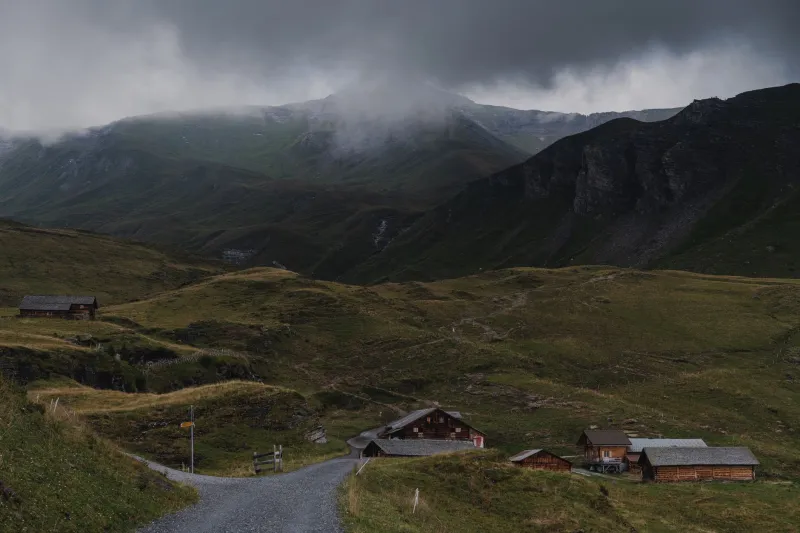
There's a habit that follows American hikers across the Atlantic like a carry-on bag. You rent a car, punch the highest trailhead into Google Maps, park at the top, and hit the trail with the summit already half-done. It's efficient. It's logical. And according to most Swiss locals, it's completely missing the point.
Spend enough time talking to people who actually live in the Alps — the farmers, the trail runners, the retired schoolteachers who've walked the same ridgelines for forty years — and a different philosophy starts to emerge. One that begins at the bottom and earns every meter of elevation, slowly, deliberately, with full attention paid to everything in between.
The American Instinct vs. the Alpine Mindset
Back home, we're wired for summits. National Park culture in the US is built around iconic high points — Half Dome, Longs Peak, Mount Rainier. The trailhead is just the starting gun, and the peak is the finish line. Everything in the middle is something you push through.
In Switzerland, that logic gets quietly flipped. The journey is the destination, and that journey traditionally starts where the land does — down in the valley, where villages cluster around church steeples, where rivers run fast and cold, and where the mountain hasn't even begun to show itself yet.
This isn't just poetic. It's practical. And once you try it, the high-trailhead shortcut starts to feel like skipping the first two acts of a movie.
What You're Actually Missing Down There
Let's talk specifics. Take the Lauterbrunnen Valley in the Bernese Oberland — one of the most dramatically carved glacial valleys on the continent. Most visitors arrive by train, gawk at the waterfalls, then immediately board a gondola toward Mürren or a cog railway toward Kleine Scheidegg. The valley floor becomes a transit hub rather than a destination.
But start walking from Lauterbrunnen village itself, and something different happens. The trail climbs through forest so dense it feels like the mountain is swallowing you. You pass through tiny hamlets that don't appear on tourist maps. Farmers wave from hay fields. The Staubbach Falls — all 300 meters of it — gradually reveals itself from angles no gondola window will ever offer you.
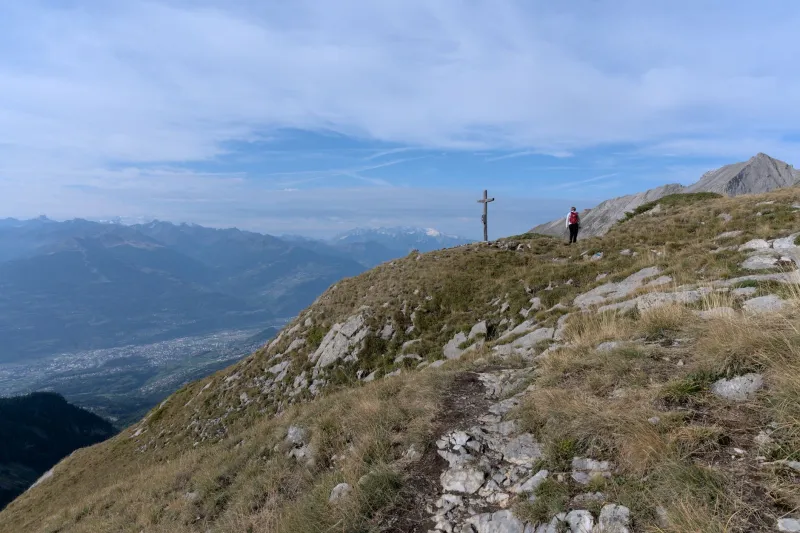
By the time you reach the ridge, you've earned the view in a way that actually registers in your body and your memory. It hits differently. Hikers who've done both versions of this route will tell you the same thing without hesitation.
This pattern repeats across Switzerland. The Engadin Valley, the Simmental, the trails above Grindelwald — nearly all of them reward the hiker who begins at the base with hidden gorges, wildflower meadows, and encounters with local life that simply don't exist at elevation.
The Knee Science Is Real
Here's the part that might actually convince you if the scenery argument doesn't: starting low is genuinely better for your body.
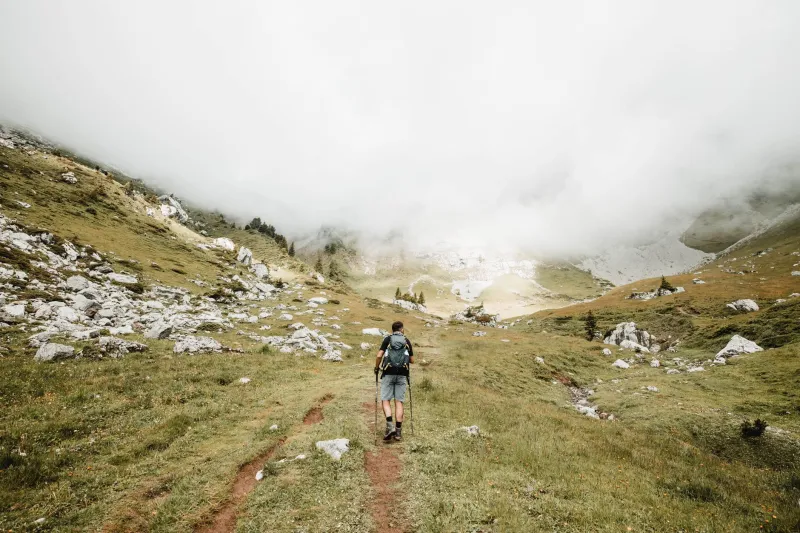
American hikers who drive to high trailheads and immediately begin gaining altitude are skipping the warm-up their joints desperately need. Knees, in particular, don't love being asked to absorb steep terrain cold. The gradual climb from a valley floor acts as a natural warm-up sequence — gentle grades in the first hour, increasing pitch as the trail rises, full alpine terrain only once your legs have had time to remember what they're doing.
Swiss trail design often reflects this. Many classic routes are built to ascend progressively, rewarding patience with easier early miles and harder but more spectacular upper sections. When you drive to the midpoint, you skip the easy miles and hit the steep stuff with cold muscles. Your knees will file a formal complaint by day two.
The Villages You'd Never See Otherwise
There's a category of Swiss village that exists almost entirely outside the tourist circuit. Not because they're hiding, but because the only way to reach them comfortably is on foot, from below.
Places like Grimentz in the Val d'Anniviers, or Bosco Gurin tucked into the Ticino hills, or the string of farming hamlets above the Simme Valley — these aren't on anyone's Instagram highlight reel. They have one café, maybe a small chapel, and residents who are genuinely surprised to see a foreign face. That surprise, more often than not, turns into a conversation, a coffee, and occasionally an invitation to see something you'd never have found on a trail map.
This is the Switzerland that Swiss people actually inhabit. And you can only stumble into it by walking through it, not over it.
How to Actually Do This on Your Trip
Shifting to a low-start hiking strategy doesn't require a total itinerary overhaul. A few adjustments go a long way.
Take the train down, not just up. Switzerland's rail network reaches into most major valleys. Instead of driving to the trailhead, take the train to the valley station and walk up. At the end of the day, catch the train back down — or better yet, descend a different route entirely.
Give yourself an extra hour. Low-start routes take longer. Budget for it. That extra time isn't wasted; it's the whole point.
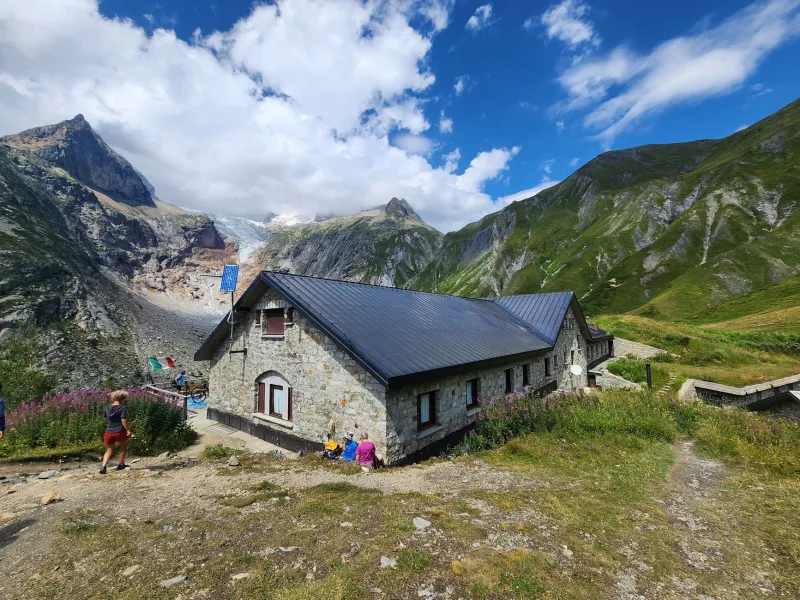
Ditch the summit-or-bust mentality. Pick a destination that's meaningful at multiple elevations — a mountain restaurant, a ridge viewpoint, a lake — so the hike feels complete even if you don't push all the way to the top.
Talk to the locals before you go. Guesthouses and tourist offices in Swiss valley towns are genuinely helpful and often under-utilized. Ask where people actually walk. The answer is almost never the route in the brochure rack.
The Longer View
There's something quietly philosophical about the way Swiss hikers approach their mountains. It's not about conquering elevation as fast as possible. It's about moving through a landscape with enough slowness to actually see it — the way light shifts on a limestone cliff face, the way a valley village sounds at seven in the morning, the way your legs feel by the time you've truly earned a ridge.
American outdoor culture is getting there. The rise of trail running, long-distance thru-hiking, and bikepacking has started to shift the conversation away from summits and toward journeys. Switzerland just got there a few centuries earlier.
Next time you're planning a Swiss hiking trip, resist the urge to start at the top. Find the valley. Find the village. Start walking. The mountain will still be there when you arrive — and it'll mean a whole lot more when you do.