Chasing Color: Your Complete Seasonal Guide to Switzerland's Wildflower Trails
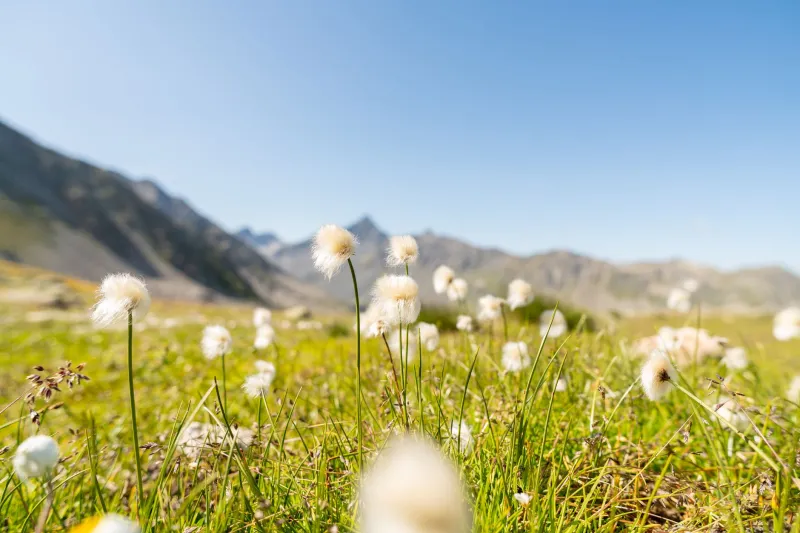
If you've ever scrolled through photos of Swiss meadows carpeted in purple, yellow, and white and wondered whether that's actually real — it absolutely is. Switzerland's alpine wildflower season is one of those rare travel experiences that lives up to the hype, sometimes even exceeding it. But here's the thing: timing is everything. Show up too early or too late, and you might find bare slopes or dried-out stems where a riot of color should be. Get the timing right, and you'll be standing in the middle of something that feels almost too beautiful to be natural.
This guide breaks it all down month by month, with specific trail picks and a few photography tips to help you bring those blooms home in more than just your memory.
Late April to May: The Snow Melts, and the First Colors Arrive
Most American hikers don't think of April as prime Switzerland time, but for wildflower chasers, it's genuinely exciting. As snowpack retreats from lower elevations — think valleys around 3,000 to 5,000 feet — the first blooms emerge in almost defiant fashion.
The stars of this window are spring crocuses (Crocus vernus) and the iconic alpine snowbell (Soldanella alpina), a tiny violet flower that literally melts through snow to bloom. You'll also start spotting yellow primroses along stream banks and sheltered forest edges.
Trail pick: The area around Grindelwald in the Bernese Oberland offers accessible lower-elevation paths where these early bloomers are abundant. The Gletscherschlucht gorge trail is a solid option that doesn't require serious elevation gain — perfect if you're still shaking off jet lag.
Photo tip: Overcast days are your friend in May. Soft, diffused light brings out the subtle color gradients in pale flowers without harsh shadows. Get low — like, really low — and shoot from ground level to fill your frame with blooms against a blurred meadow background.
June: The Meadows Wake Up
June is when things start getting serious. Mid-elevation meadows (roughly 5,000 to 7,000 feet) burst into action as temperatures climb and snowmelt rushes through the soil. This is prime time for gentians — those impossibly vivid blue trumpets that look like something out of a fantasy novel — along with yellow arnica, white wood anemones, and the first appearances of alpine roses (Rhododendron ferrugineum).
The alpine rose isn't technically a rose, but when entire hillsides flush pink-red with their blooms, the name feels earned. In the Engadin Valley near St. Moritz, June hillsides can look almost painted.
Trail pick: The Five Lakes Walk (Fünf-Seen-Wanderung) near Zermatt hits a sweet spot in June, combining high-elevation lake reflections with meadow blooms along the route. It's a moderate 5-mile loop with manageable elevation change — accessible for most fitness levels.
Photo tip: For gentians, try backlighting. Position yourself so the sun comes through the petals from behind, and you'll capture an almost luminous quality in that deep blue. A macro lens or close-up filter is worth the extra bag weight here.
July: Peak Bloom and the High Alpine Show
If you can only visit Switzerland once, July is the month to do it for wildflowers. This is peak season across virtually every elevation band, and the diversity on display is staggering. Edelweiss (Leontopodium alpinum) — Switzerland's national flower and cultural icon — blooms at its best in rocky, high-elevation terrain. Yellow glacier buttercups push right up to the edge of snowfields. Carpets of purple alpine asters and pink bistort fill open meadows.
Biodiversity nerds will want to know: Switzerland's alpine zones support over 600 species of flowering plants, and a disproportionate number of them peak simultaneously in July. That's the kind of statistic that actually means something when you're standing in it.
Trail pick: The Aletsch Panorama Trail in the UNESCO-listed Jungfrau-Aletsch region is a July must-do. The route traces ridgelines above the world's largest glacier in the Alps, with wildflower meadows framing those ice-age views in a way that's genuinely hard to process. Plan for a full day — it's roughly 8 miles with significant elevation change.
Photo tip: July light in the Alps can be brutally harsh at midday. Head out before 9 a.m. or after 5 p.m. for golden-hour softness. Morning also gives you dewy flowers, which adds texture and sparkle to close-up shots.
August: High Elevation Holdouts and Late-Season Gems
As July rolls into August, the show shifts upward. Lower meadows start to fade, but push above 8,000 feet and you'll find blooms that are just hitting their stride. This is when the rarer, high-altitude specialists come out — including several endemic species found almost nowhere else on Earth.
Look for the purple-pink Erinus alpinus on rocky cliff faces, delicate white Androsace cushion plants tucked into scree slopes, and the striking yellow Senecio incanus spreading across gravelly terrain. The Valais region, with its drier, sunnier microclimate, tends to hold color longer than the wetter northern slopes.
Trail pick: The Haute Route — the classic high-level traverse from Chamonix to Zermatt — passes through some of the most botanically rich terrain in the Alps during August. You don't have to do the whole 10-day route; day hikes out of Verbier or Arolla give you access to the same flower-rich high zones.
Photo tip: Scree and rock garden flowers require patience. Spend time in one spot rather than hiking fast — you'll notice details that a moving hiker walks right past. A small reflector card (even a piece of white foam board) can bounce fill light into shadowed blooms on rocky terrain.
September: The Quiet Season Nobody Talks About
September gets overlooked, and honestly, that's a gift for those in the know. Crowds thin dramatically after Labor Day (a travel pattern American hikers will recognize), and while the main bloom is winding down, the season offers its own rewards. Autumn crocuses (Colchicum autumnale) push up through yellowing grass in lower meadows. Gentians make a second appearance in some areas. And the combination of turning larch trees — those golden, needle-dropping conifers unique to alpine zones — with lingering wildflowers creates a visual layering that's arguably more photogenic than peak summer.
Trail pick: The Swiss National Park near Zernez in the Engadin is spectacular in September. The park's strict no-intervention policy means ecosystems develop naturally, and the fall transition here feels wilder and more authentic than heavily managed tourist areas.
Photo tip: Embrace the imperfection of late-season flowers. Slightly faded petals, seed heads, and dried stems alongside fresh late-bloomers tell a more complete ecological story than a pristine July meadow. That narrative quality often makes for more compelling images.
Planning Your Trip: A Few Practical Notes
Elevation is everything in Swiss wildflower planning. A rule of thumb: bloom peaks shift upward by roughly 1,000 feet per month from May through August. So if you're visiting in early July, aim for trails in the 6,000 to 7,500-foot range for peak color.
Weather variability is real — Switzerland's mountain weather can change fast, and a late-spring snowstorm can push the entire bloom calendar back by two to three weeks. Check regional webcams and local hiking forums close to your trip for real-time conditions. The website of Schweizer Wanderwege (Switzerland's national hiking federation) posts trail conditions regularly.
And finally: leave the flowers where they are. Switzerland's alpine ecosystems are fragile, and picking wildflowers in protected zones carries actual fines. The best souvenir is a great photograph — and with this guide, you've got a solid head start on getting one.